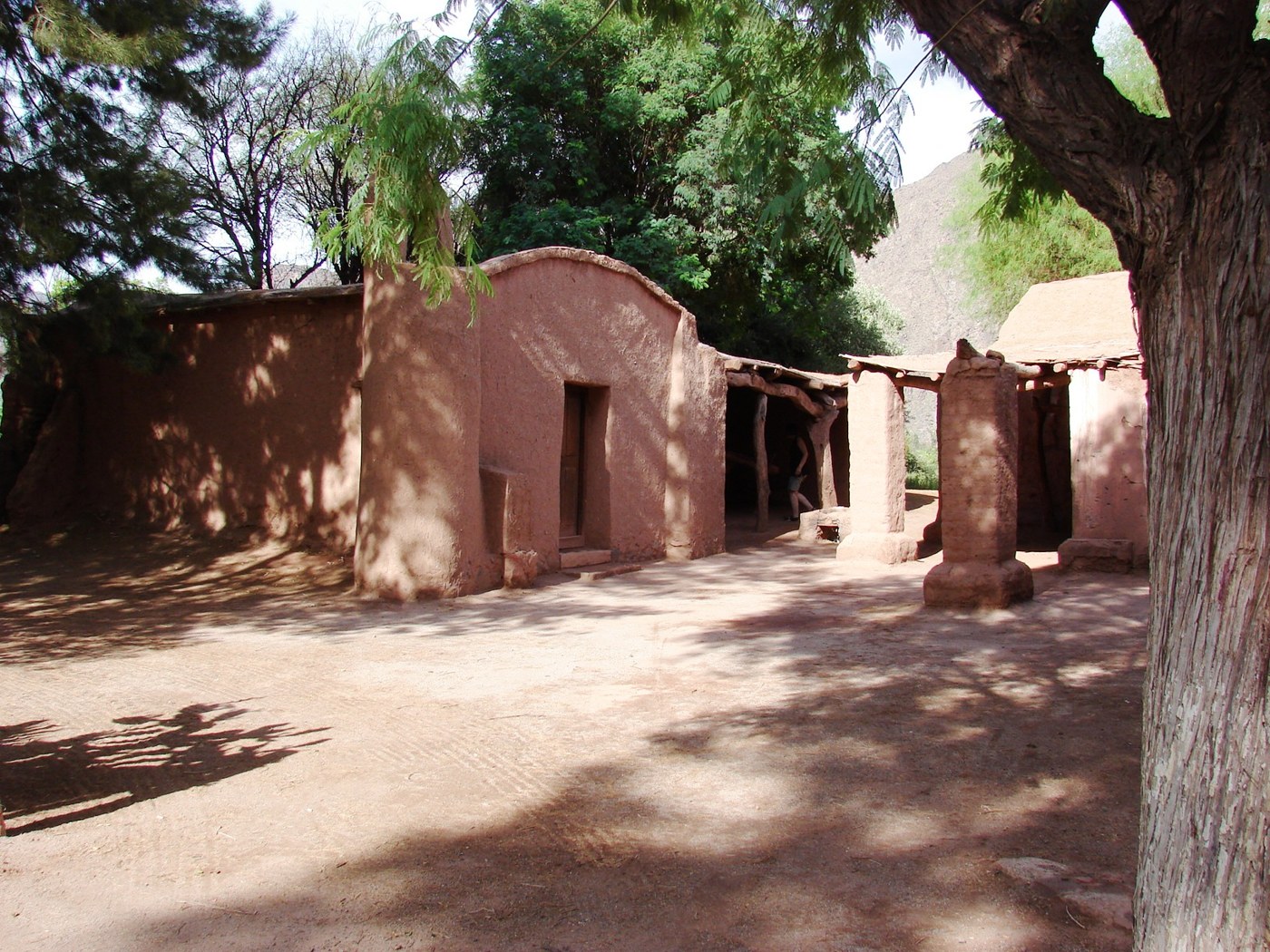

An adobe wall is more than a picturesque surface. It belongs to a way of building that connects materials, labor, and environmental conditions. In northwest Argentina's valleys, looking at thickness, openings, and protection can reveal more than searching for the perfect photographic color. A building also tells a maintenance story. Earthen construction needs care, rather than admiration that treats it as indestructible.
What material are you seeing?
Adobe is made with earth and water, often with plant fibers, molded and dried without the firing used for ceramic bricks. Its presence along Catamarca's Ruta del Adobe allows comparisons between religious and domestic uses. Not every earthen building uses the same technique, and not all its parts are original. When a wall is plastered, consult the site's information before identifying its material solely from appearance.
Temperature and water
Thick walls can slow the rate at which indoor temperature changes. This does not mean a building stays cool or warm under every circumstance. Orientation, ventilation, shade, and daily use also matter. During a visit, notice how openings are protected and where people spend time. The relationship between courtyard and rooms often provides a better question than assigning universal advantages to a material.
Water deserves particular attention in conservation. Without attempting your own diagnosis, you can observe the connection with the ground, where rainwater drains, and which surfaces are sheltered. A crack does not authorize touching, scraping, or taking a fragment. Nor does a repair with a different appearance automatically demonstrate neglect. It may reflect an intervention whose reasoning cannot be understood simply by looking at it.
Architecture still in use
If a building remains in use, respect its current purpose. A home does not become open to visitors because it appears on a cultural route, and a chapel may be hosting a celebration. Ask where entry and photography are permitted. The most useful comparison between buildings is not deciding which looks oldest. It is recognizing how each responds to particular needs and how the people responsible for it maintain that response in the present.