
The image of Casa Histórica often arrives before the visit: a white facade, blue doors, and a date associated with Argentina's independence. In San Miguel de Tucumán, it helps to separate three connected stories: the political meeting of 1816, the building's earlier life as a home, and the later decisions that made it a museum. This approach lets you read the place without expecting every wall to be the same age.
A transformed house
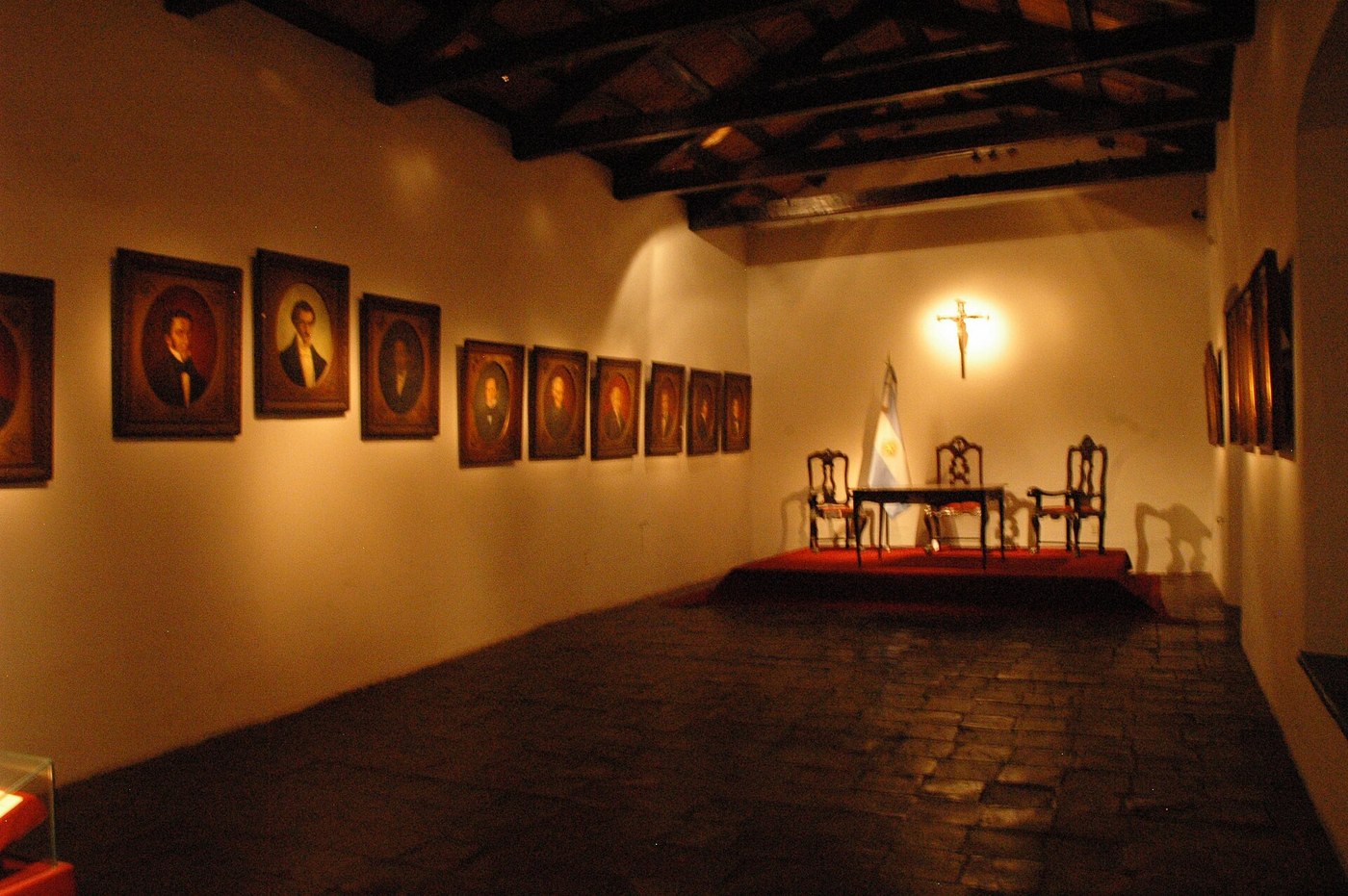
On July 9, 1816, independence was declared here for the United Provinces of the Río de la Plata. The house belonged to Francisca Bazán de Laguna and was adapted for the congress. The museum also explains later changes: the room associated with the declaration survived, while other parts of today's complex reflect twentieth-century reconstruction. Recognizing that distinction does not reduce the site's value. It raises a useful question about what each generation chose to preserve.
Reading the museum evidence
As you walk through, consider how domestic spaces connect with public uses. A courtyard can help you imagine circulation, but it cannot prove who crossed it on a particular day. Separate what a label identifies from what a recreated setting suggests. If an object is described as similar to those used in the period, do not silently turn it into a delegate's personal possession. That small distinction makes the evidence more meaningful.
Choose one political question before entering: who was represented, which conflicts remained unresolved, or how the news traveled. Look for answers in the displays and notice their limits. A declaration was a decisive act, but not a switch that instantly settled territorial, military, and social disagreements. Following the museum's chronology can help place the famous moment within a longer and less tidy process.
Leaving room for questions
With children, start with something visible. Comparing a meeting room with a family living space offers a concrete way into an abstract subject. There is no need to make every display a lesson or require everyone to memorize dates. Selecting one document and discussing who wrote it can encourage more careful observation than trying to absorb every panel. Allow different visitors to leave with different questions.
Check the museum's own visitor information and current activities before arranging your day. Afterward, take another look at the facade from the street. It can now represent more than a postcard view: a story about politics, preservation, and public memory. Recording one unanswered question gives you a way to continue reading without pretending that a single visit explains the whole independence process.