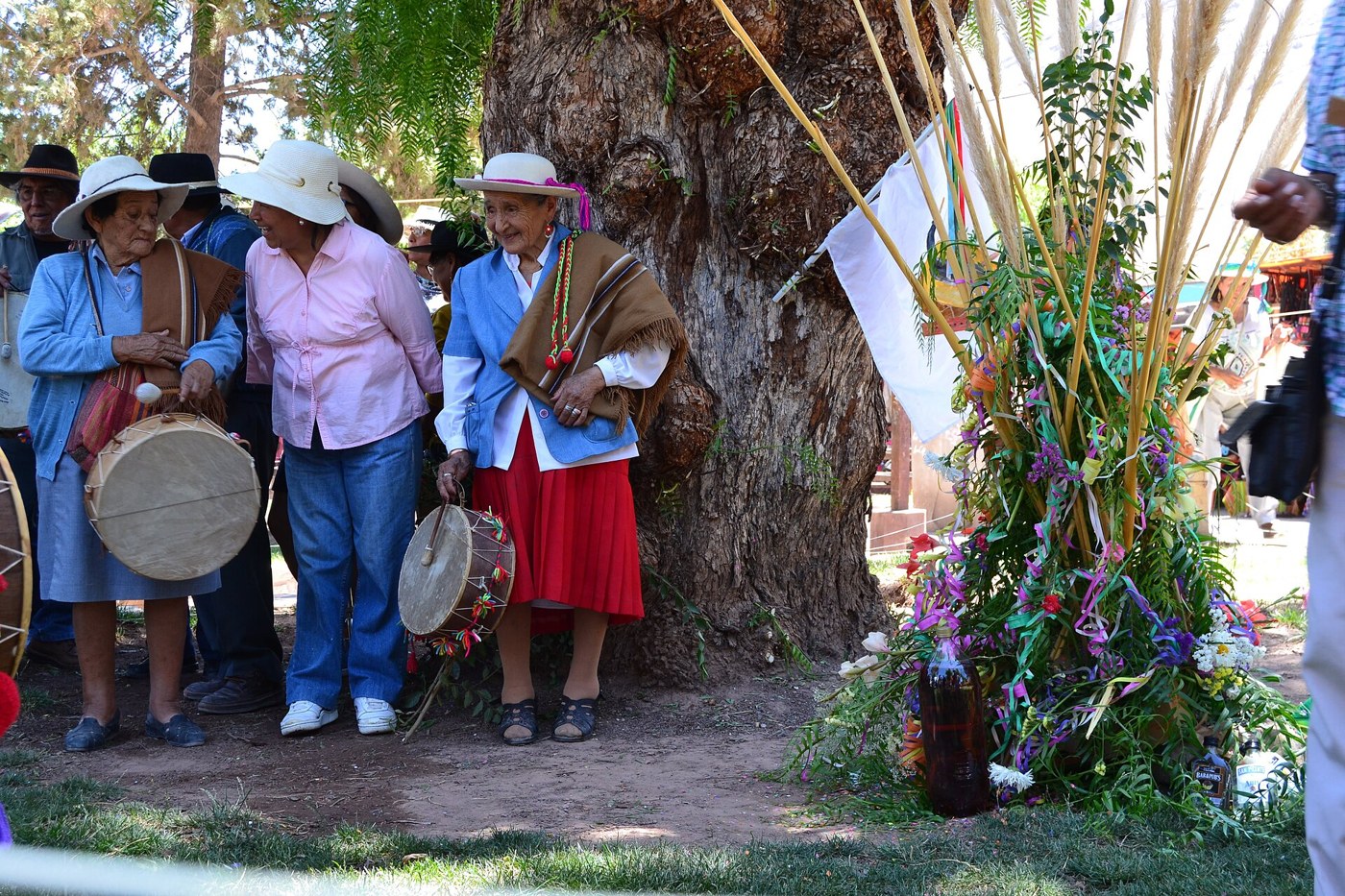

A copla may be brief and still change the mood of a gathering. Its shortness does not make it decoration between songs. Words, delivery, and the response of listeners are part of the event. To approach singing with the caja drum in northern Argentina, pay as much attention to the shared situation as to the words you can understand.
Name with care
National educational material describes canto con caja as a group of practices including forms such as baguala, tonada, and vidala. The caja is a handheld drum that accompanies the voice. These references provide orientation, but they do not qualify a new listener to classify every performance after hearing it once. When questions are welcome, let singers identify their own practice.
What a recording leaves out
Listen first to how the exchange begins and how others respond. There may be alternating voices, a meaningful silence, or an intervention that answers another person. An isolated recording loses some of that context. To remember the occasion, note what kind of gathering it was and how participation was introduced, without recording personal details that were not offered for wider circulation.
Asking for a repetition to improve audio quality can interrupt the meaning of the event. Request permission before recording and distinguish private listening from social-media publication. One person's authorization may not cover everyone visible or audible. Without permission, continue listening. An experience does not need to become a file in order to matter.
If a copla includes humor or an allusion you do not understand, avoid immediately translating it into a universal explanation. It may refer to relationships among participants or shared knowledge. A later question, without demanding an answer, is better than presenting your interpretation as definitive. You do not need to reproduce complete lyrics to describe the gathering; you can discuss the exchange and what it encouraged you to notice.
The setting matters
A workshop advertised for visitors provides a different setting from a family or ceremonial gathering. Demonstrations and questions may be planned in a workshop; elsewhere, follow the expectations of the people hosting it. Recognizing that distinction makes learning possible without treating every voice as a performance available on request.