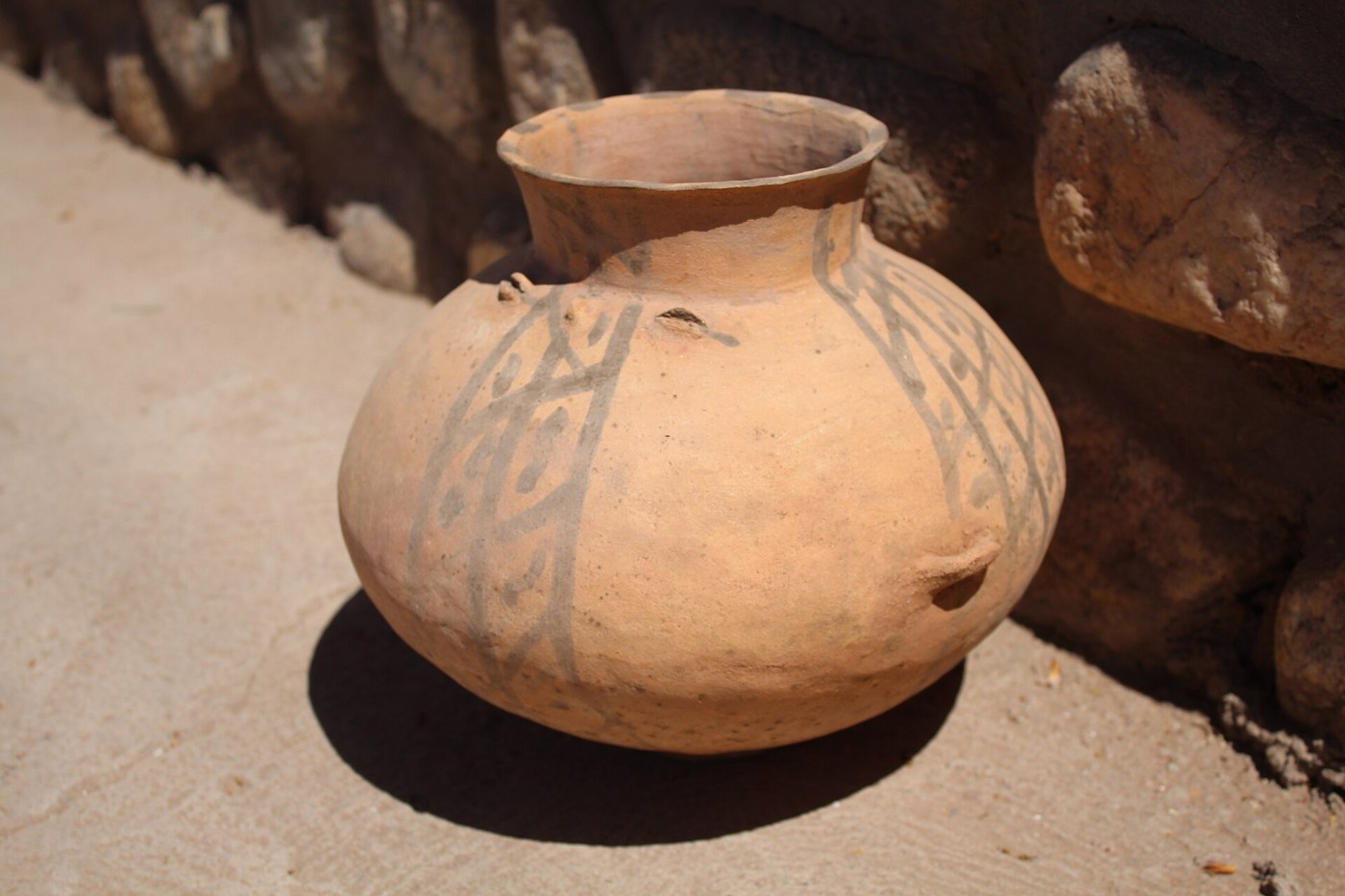

A vessel can recall old forms while remaining a contemporary creation. In northwest Argentina's workshops and markets, that relationship deserves questions more precise than “Is it authentic?” Distinguish who made the piece, which technique was used, what it is for, and where its visual references come from. These are different matters, and surface color alone settles none of them.
References and authorship
The National University of Catamarca offers training connecting pre-Hispanic ceramic traditions with technical knowledge and craft work. That continuity of study does not mean every current piece exactly reproduces an ancient one. Research, reinterpretation, and personal design may all be involved. Asking how a form was chosen recognizes present-day authorship without erasing historical references.
Examine the rim, base, and joins, with permission to handle the object. A hand-built piece may retain process marks that are not automatically flaws. Conversely, not every irregularity proves manual production. If a technique interests you, ask the maker to name and explain it. Appreciating a result does not require an automatic hierarchy among hand-building, molds, and wheel throwing.
What it was made for
Intended use is essential when buying. A decorative object should not become a food container merely because it resembles a cup or plate. Ask whether it was made for food contact, whether it tolerates heat, and how to clean it. If the answer is unclear, choose decorative use or a piece with sufficient information. A glossy or rustic appearance cannot replace that confirmation.
It is also important to distinguish craft from archaeological material. A modern reproduction should be described as one. Do not buy fragments presented as ancient finds or collect remains at a site. Removing their context reduces the information they contain and may involve heritage restrictions. Museums and their interpretation provide a more appropriate setting for learning about older objects.
Taking home an identified piece
Consider transport before deciding. Request packaging that protects handles and projections without pressing against fragile points, and avoid placing weight on top. Keep the producer's name and use instructions with the piece. This record supports a specific story of making instead of presenting any object as a representation of every culture in the north. The distinction makes a souvenir more meaningful and its care more straightforward.