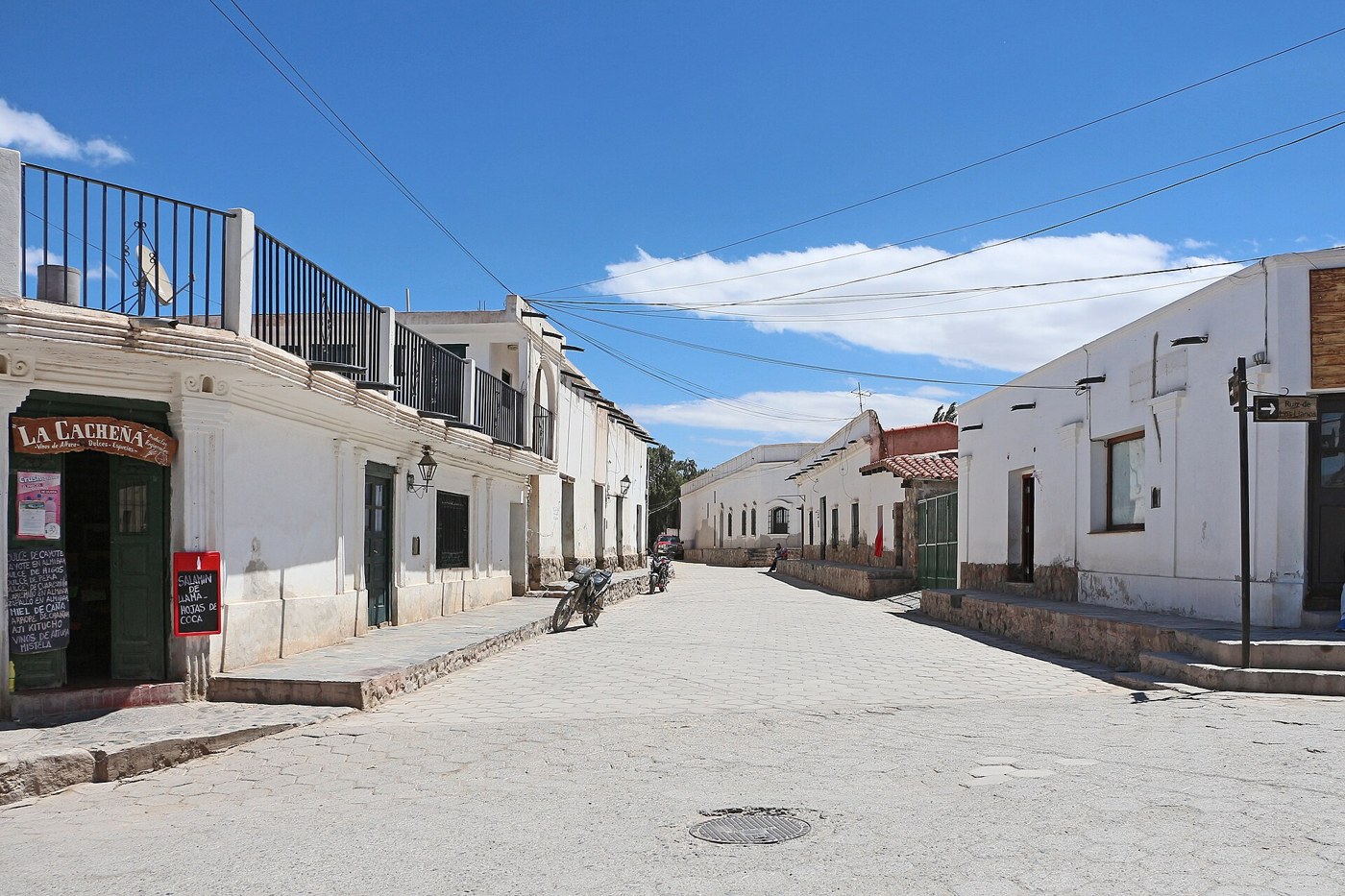

Cachi is often recognized through pale facades, its church, and the mountains surrounding it. That image can guide a first walk, but it becomes more interesting when connected with the valley’s history and production. The town is more than a destination at the end of the Cuesta del Obispo. It can be a place to pause a Calchaquí Valleys journey and understand what appears on both sides of the road.
Materials with a history
The historic center invites attention to materials, proportions, and relationships between buildings and public space. In the church, construction elements should be understood as existing heritage, not as an invitation to seek similar materials in the surrounding landscape. Cardón wood in old objects or structures belongs to a history of use; it does not justify cutting or collecting living plants today. A heritage explanation can help distinguish those issues, which are sometimes blurred when choosing souvenirs. Observing a material does not require taking a piece of it home.
Before the visible town
The Pío Pablo Díaz Archaeological Museum provides another introduction to the territory. A collection can show how the valley’s history predates the street pattern visible in the center. Pay attention to where objects came from and how their contexts are explained. An isolated vessel tells a different story from an object connected with a settlement, activity, or period. If a label leaves questions open, you do not need to fill the gap with an imagined interpretation. A question for museum staff may be more useful than a quick conclusion drawn from appearance alone.
Give the valley time
Outside the urban circuit, agricultural activities and producer visits require specific arrangements. Ask what can be visited, how to reach it, and how long the activity lasts. Not every farm welcomes unannounced visitors. Distinguish Cachi itself from places advertised as excursions from town: proximity on a map does not remove elevation changes or slow roads. For a short stay, an interpreted visit and a walk through the settlement may be more memorable than immediately getting back into a vehicle. Understanding the valley improves when there is time to connect its elements rather than simply passing them.