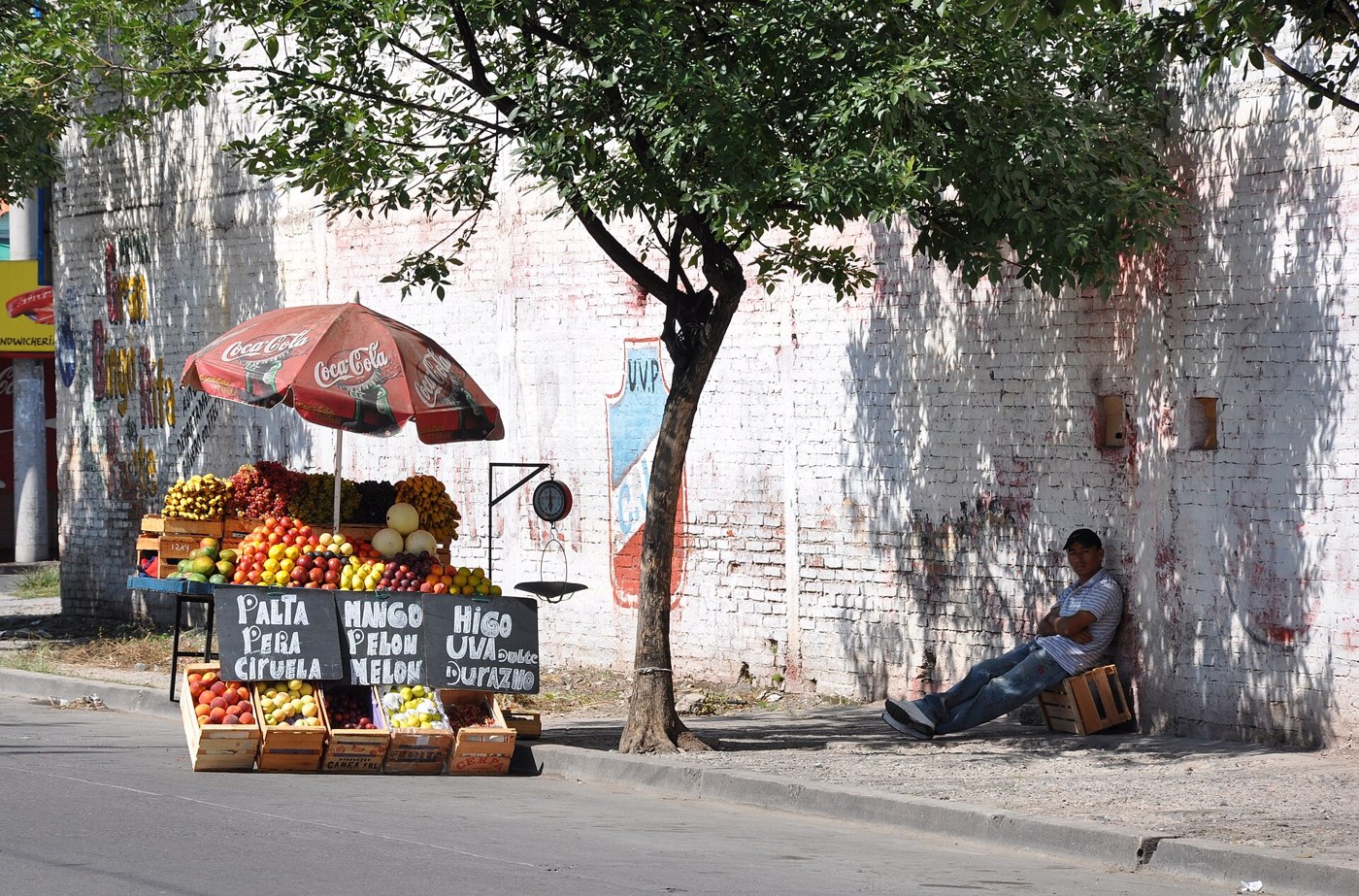

A market brings together activities that may look like one scene from the entrance: fresh produce, prepared meals, spices, utensils, and conversation. Each stall nevertheless has its own work and offer. Visiting attentively means recognizing those differences rather than applying what you saw, tasted, or asked at one counter to the whole market.
Orient yourself among offers
Before buying, make a short orientation circuit without blocking aisles. Identify places selling ingredients and those serving ready-to-eat food. A product displayed for cooking may require preparation; not everything is intended for immediate consumption. If a variety or use is unfamiliar, ask its local name and purpose without handling food other people will purchase.
Origin deserves a specific question. Food sold in a town was not necessarily grown there, and a varied market may include products from several regions. Asking where an item comes from adds context without demanding that everything be local. If the seller does not know a detail, do not fill the gap with an assumption based on the nearby landscape.
Food and photographs
For prepared meals, observe how food is held and served and ask what matters for your preferences or restrictions. ANMAT food guidance emphasizes hygiene, storage, and separation during preparation. A traditional appearance does not guarantee safety, just as a simple stall does not demonstrate the opposite. Base decisions on information and concrete conditions rather than aesthetics.
Request permission when a photograph focuses on a person or their work. Buying something is not required to say hello, but it does not authorize recording everything either. Avoid delaying a line with a lengthy photo session or asking someone to repeat a task for the camera. An overall image taken without obstruction can describe activity without intruding on a private conversation.
Buy what you can care for
Choose quantities you can eat or store during the journey. A large assortment of perishables may be less useful than a small purchase with clear instructions. Keep labels when available and ask about transport. Before taking food out of the country, check the destination's requirements.
Afterward, separate observations from conclusions: one stall sold a particular fruit, one cook explained a recipe, one seller identified an origin. Remembering this way allows accurate information to be shared without describing the entire market as one uniform business. Its interest lies precisely in the coexistence of different skills and supply routes within a shared space.