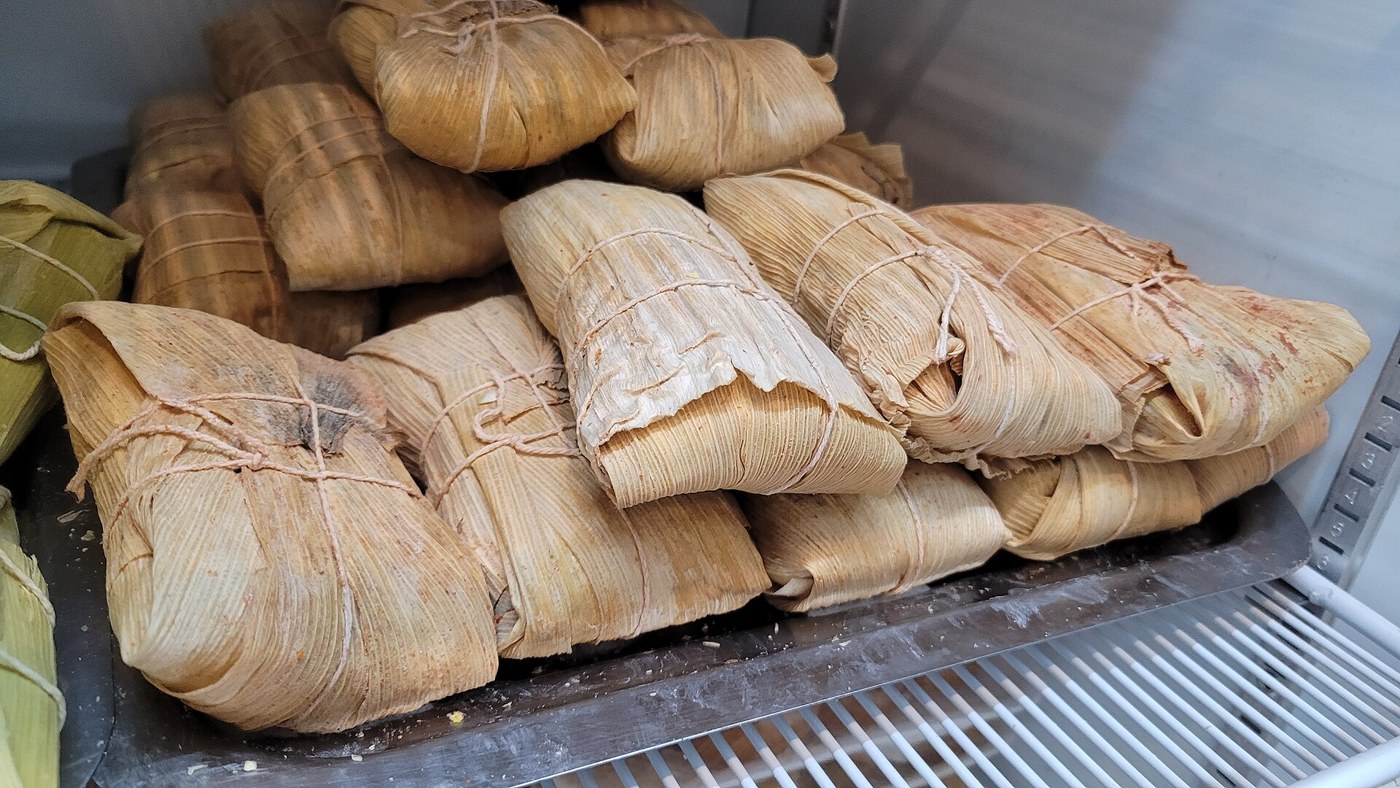

A wrapped tamal may look like a simple parcel, but the husk conceals decisions about dough, filling, and cooking. In northern Argentina, opening it reveals how these parts work together. The wrapper alone is not a reliable identification because other preparations also use corn leaves. The useful question is what is inside and how it was assembled to cook together.
Two parts inside the parcel
Tucumán's food references describe corn-flour dough that may incorporate squash and surround seasoned meat. Variants contain different ingredients, so a regional description cannot replace the actual recipe at a stall or restaurant. Ask which meat is used and whether egg, raisins, or other components relevant to you are included before ordering.
Dough and filling perform different jobs. The first provides structure and absorbs some flavor; the second contributes another texture and concentrated seasoning. Notice how they combine without expecting the dough to resemble fresh-corn humita. The distinction between processed dried corn and tender corn helps explain why two similar-looking parcels can produce different eating experiences.
Opening and tasting
To open one, place it on a plate and carefully remove ties and husks. Steam and contents may be hot. It is not necessary to unwrap everything before beginning, but the inedible materials need to be separated. If uncertain about a component, ask rather than assuming the entire parcel is intended to be eaten.
A sauce can alter the filling's balance. Taste without it first, then try a small amount. For comparison, choose two identified versions and note concrete differences: meat type, dough thickness, or seasoning intensity. Describing one version as different does not require declaring another wrong. The cook's explanation can make that comparison more informative than appearance alone.
Taking them along
When buying several to take away, ask how to store them and when to eat them. A corn husk preserves a traditional presentation but does not replace appropriate storage for cooked food. On a long transfer day, eating at the source may be a better choice than carrying them without a suitable arrangement. The memory then remains connected with preparation and conversation rather than an expectation based only on shape.