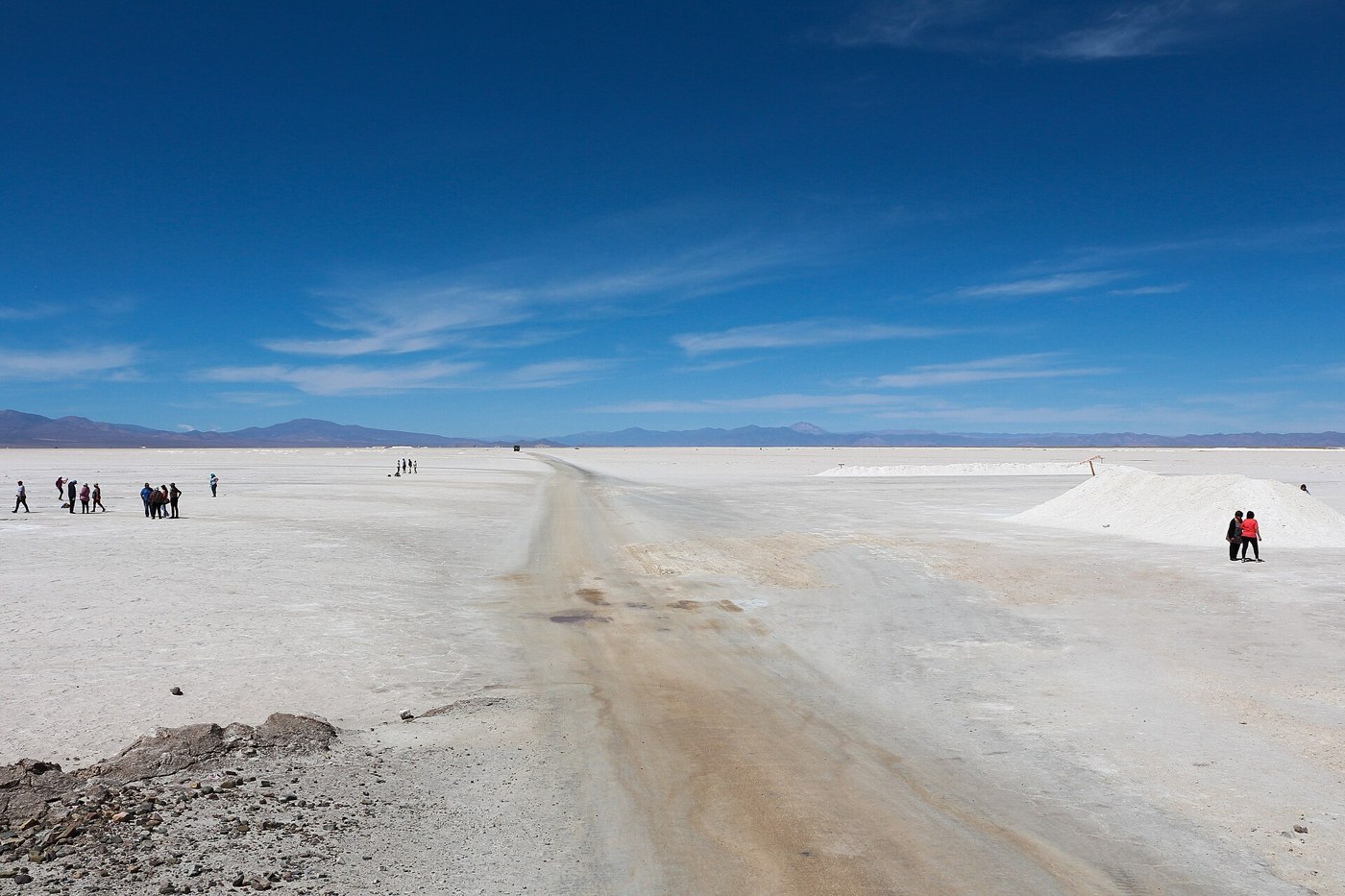

The white surface of Salinas Grandes can create an impression of emptiness. Yet the salt flat belongs to an inhabited, working territory. Salt production, community decisions, and the reception of visitors coexist in the same landscape. Treating it only as a backdrop for perspective photographs leaves those relationships out of the picture. Before planning an image, listen to how the outing is organized and distinguish working areas from the places authorized for visitors. That context changes what the apparent openness of the surface means.
A surface that tells a story of water
Argentina's geological survey identifies salt deposits associated with a lake environment and evaporation processes. This helps explain the white surface as part of a history of water, even when it appears dry. Not every visible mark has the same origin: an extraction cut, a vehicle track, and a natural pattern require different explanations. Asking about those distinctions makes the visit more interesting than attributing every shape to one process or imagining that the salt flat always looks exactly the same. Observation becomes more useful when it is paired with questions.
Following local arrangements
La Ruta Natural states that interior routes are conducted with community guides. Following that arrangement does more than help visitors navigate a surface that can be difficult to interpret; it recognizes local management of the territory. Agree on the route and its conditions before setting out, and respect any area excluded from the visit. Do not wander away in search of a photograph without people or vehicles. The apparent openness of the salt flat does not make it a place without boundaries, established uses, or people responsible for access.
The approach is part of the day
The approach from Purmamarca on Route 52 crosses Cuesta de Lipán, so the journey includes altitude before reaching the salt flat. This transition deserves time and should not be judged by mileage alone. Allow room for the day's conditions and check the state of access before leaving. During the visit, protect your eyes from glare and avoid touching installations or taking salt as a souvenir without permission. A well-considered experience combines the visual scale of the place with an understanding of the work and communities that give it context.