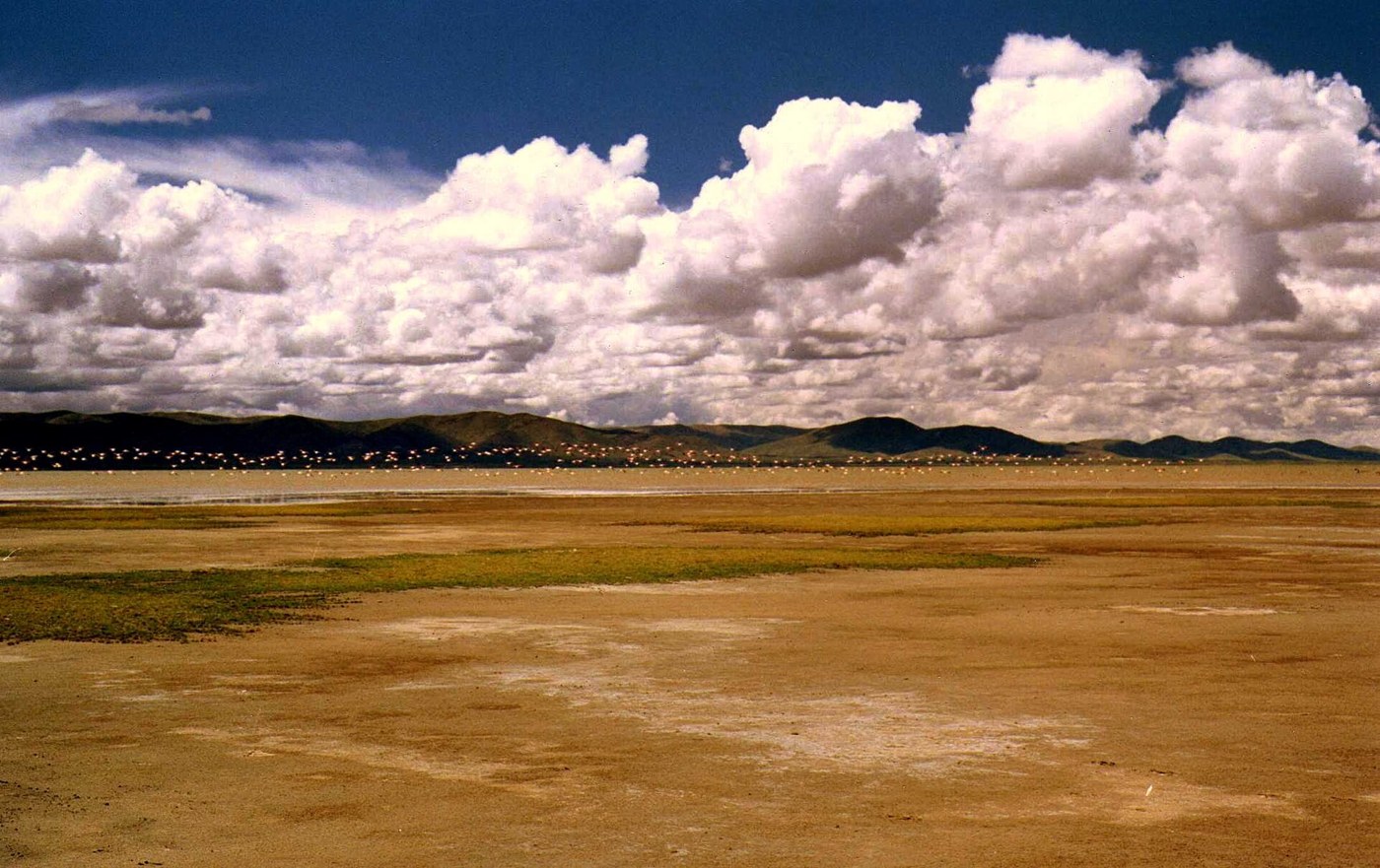

At Pozuelos, the shoreline is not a fixed line that must match the photograph you saw before traveling. This wetland in the Jujuy Puna changes with water availability. Arriving with that idea lets you observe what is present instead of judging the visit against an image taken in another season or year. Water, exposed ground, and birds form a changing scene rather than a backdrop arranged for visitors. A different appearance can become the starting point for a better question.
Water and the basin
Official documentation describes a closed basin without an outlet to the sea and a shallow lake whose extent depends on water inputs. Its Ramsar description notes that partial or complete drying can occur. An exposed surface therefore does not, by itself, show that you have left the wetland behind or that the place has lost all interest. Interpreting its condition requires context and observations over time, rather than a single impression gathered near the entrance.
Observe before identifying
First examine the overall arrangement: where water is concentrated, how the ground changes toward the shore, and which areas birds are using. Then choose one group and watch its behavior for several minutes. Is it feeding, resting, or moving? That sequence offers more than hurriedly recording a species name. Binoculars help you maintain distance while distinguishing actions that appear as tiny colored dots in a wide landscape photograph. Look for patterns before pursuing a close portrait.
Argentina's national parks authority identifies three kinds of flamingos at Pozuelos, alongside other waterbirds. Their presence does not mean you will see all of them on every visit or recognize them from pink coloring alone. Compare several features with a field guide before assigning a name, and consult protected-area staff when possible. If the viewing distance prevents a reliable identification, recording an unidentified bird is a valid observation. It is not a failed encounter that needs a more confident label.
Distance and context
Remaining still is part of the method. Choose a permitted position, avoid following groups, and never use food to attract wildlife. If birds change their behavior because of your approach, you are already altering what you wanted to observe. Greater distance can reveal a more complete scene: relationships among groups, movement along the shore, and use of different areas. Filling the frame with a single individual does not have to be the goal of every photograph.
Before setting out, ask the protected area about access conditions, open sectors, and realistic observation opportunities. Allow flexibility for weather and elevation rather than turning a species list into an obligation. Afterward, keep the date, approximate location, and conditions with your photographs. That context explains why your Pozuelos may look different from another traveler's experience and turns a collection of attractive images into a more useful record of a particular place and moment.