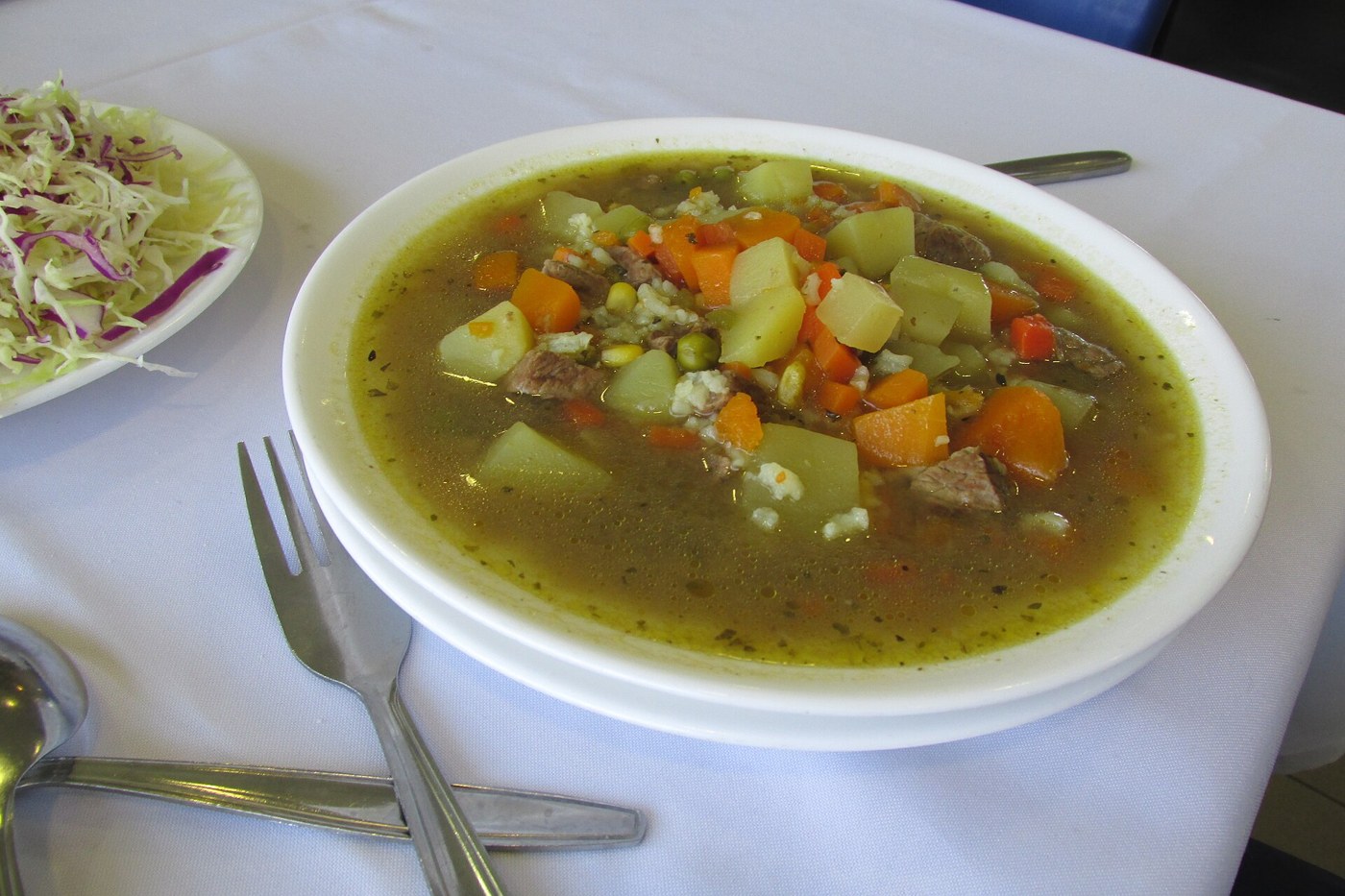

Carbonada may appear on a menu as a familiar name with little explanation. If you have not tried it, ask what this kitchen includes. The name accommodates variations in ingredients, cutting, and presentation. It is a stew in which relationships among components matter more than a rigid list, and squash can influence both flavor and consistency.
A name with variations
Tucumán Turismo describes a version with squash and meat, accompanied by rice or potatoes. Other recipes may use different combinations. That variety makes careful menu reading worthwhile rather than assuming all dishes named carbonada are interchangeable. If a version includes fruit or an unexpected ingredient, the useful question is how it contributes to the whole, not whether it invalidates the name.
Consider cutting and cooking
When tasting, first notice the size of the pieces. Larger cuts preserve ingredients as separate elements, while smaller ones may integrate more closely with the cooking liquid. Squash that retains its shape feels different from squash that partly breaks down. Neither difference needs to become a better-or-worse judgment without considering what the cook intended.
Meat and vegetables share a cooking medium, so the sauce's flavor does not belong to one isolated ingredient. If you need a meat-free dish, ask whether a version is prepared that way from the beginning. Removing meat at serving does not make it vegetarian. An apparently simple accompaniment may also contain stock or other components worth clarifying.
From portion to recipe
Consider the portion within the rest of the meal. A substantial stew may work as a main course without several heavy starters, but actual serving size depends on the establishment. Asking whether it can be shared or how it is accompanied prevents ordering by guesswork. Let it cool enough to appreciate aroma and texture; food arriving very hot does not need to be eaten hurriedly.
If carbonada inspires you to cook, request a recipe reference or find an identified source after the trip. Following a complete method is more useful than combining ingredients remembered from different versions. Comparison can continue at home: what the squash contributes, how the meat is cut, and how much liquid remains. These questions preserve what was learned at the table without imposing one formula on every kitchen.